Image

Ankle Sprain Treatment: Complete Guide to Treating a Rolled Ankle

6 min. read
Show More

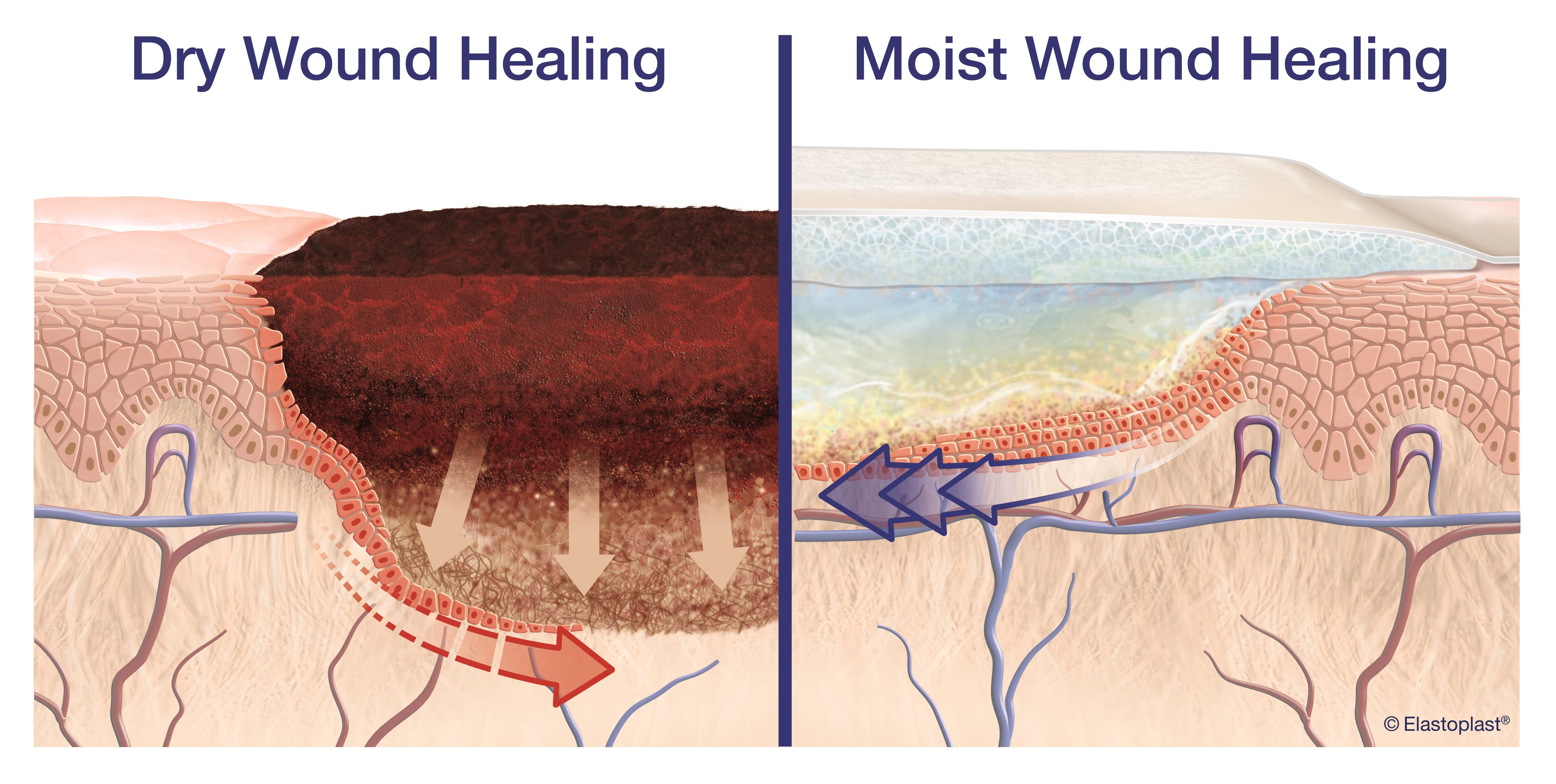
When it comes to treating minor wounds like cuts, grazes, or abrasions, many still believe that letting the wound “breathe” in dry air is the best approach. But modern medical research tells a different story. Moist wound healing, a method first validated by Dr. George D. Winter in 1962 when he discovered that epithelisation, the process of wound closure, would proceed twice as fast in a moist environment than under a scab.

Today, the principle of moist healing is generally accepted in the professional field, where many products have been developed for the healing of chronic wounds via moist wound therapy. Elastoplast, has embraced this science to develop advanced wound healing products, including hydrocolloid to create the ideal moist conditions for skin repair. Second Skin Protection offers waterproof, breathable, and skin-friendly protection that promotes faster healing compared to leaving a wound uncovered.

Keep reading to find out why creating moist conditions to heal your wound, no matter how big or small, will repair your skin faster - with a reduced risk of scarring or scabs. See what medical experts already know and why this is an advanced method.

What Is Moist Wound Healing?

Moist wound healing is a scientifically recognised method that involves covering a wound with a moisture-retentive dressing, to create an optimal healing environment. Unlike dry healing, which leaves wounds exposed to air, moist healing accelerates skin regeneration and reduces the risk of scarring and scab formation.

A Brief History of Discovery

The concept was first introduced in 1962 by British scientist George D. Winter, who found that wounds healed twice as fast in a moist environment compared to dry conditions.

Why Moist Healing Works

Moist wound healing is a proven method that involves covering a wound with a moisture-retentive dressing to create an ideal healing environment. This approach supports faster wound closure (epithelisation), encourages new tissue formation, and strengthens the immune response when compared to dry wound healing. By keeping the wound protected and hydrated, the healing process remains undisturbed, reducing the risk of scarring and scabs. Today, moist wound therapy is widely used in both clinical and everyday care settings.

How Moist Wound Healing Works

Moist wound healing supports the body’s natural repair process by maintaining hydration at the wound site. Moist wound therapy helps to create and maintain optimal conditions for wound healing and cell growth:

  • Encourages cell migration and proliferation for faster tissue regeneration
  • Speeds up the re-epithelialisation process for quicker wound closure
  • Minimises scab formation and scarring
  • Supports cellular activity involved in the wound healing process
  • Supports growth factor activity, essential for healing

This method is widely recognised for its effectiveness in promoting smoother, faster recovery.

Benefits of Moist Wound Healing

Speed Up the Healing of Your Skin

Image
Moist wound healing allows skin to renew

In order for your wound to form new skin tissue, new cells need to form. Cell growth thrives on moist conditions! New skin cells need moisture to grow and multiply. Moist wound healing promotes cell migration and proliferation, helping the skin regenerate more quickly.

Prevents Scabs

Under moist wound healing conditions, the formation of a crusty scab is prevented. This is because the moist environment promotes growth and migration of new cells, ensuring that essential proteins for closing your wound stay where they belong in order to do their repair job.

Wounds that are left to dry in air will always create scabs, which make it hard for a wound to close itself, as under these dry conditions new skin tissue will have a tough time forming.

Moist conditions prevent scab formation, allowing healing proteins and cells to stay active at the wound site. Scabs slow down healing and increase the risk of scarring.

Minimised Pain and Discomfort

Moist wound environments protect nerve endings and reduce exposure to air, which can lessen pain and irritation.

Helps Prevent Scarring and Ensure Beautiful Healing

Image

By avoiding scabs and supporting continuous cell activity, moist wound healing reduces the risk of visible scars and promotes flawless skin recovery. How do you keep a wound moist? Using a hydrocolloid plaster will create an optimal environment for faster healing.

Lower Infection Risk

A sealed, moist dressing acts as a protective barrier against external contaminants, helping to keep the wound protected during the healing process and minimising the risk of infection.

Moist vs Dry Wound Healing: The Key Differences

Aspect

Dry Wound Healing

Moist Wound Healing

Healing Speed

Slower due to scab formation, which impedes cell movement

Faster as epithelial cells migrate easily across moist surfaces

Pain Levels

Higher; exposed nerve endings can cause discomfort

Lower; moist dressings protect nerve endings and reduce irritation

Scarring

Increased risk due to scab formation and delayed healing

Reduced risk; moist conditions support smoother tissue regeneration

Infection Risk

Higher; open wounds are more exposed to bacteria

Lower; sealed moist dressings act as a barrier making the area less hospitable to bacteria.

Cell Activity

Limited; dry conditions hinder cell migration and proliferation

Enhanced; moist environments promote cell growth

Growth Factor Activity

Reduced; dry wounds lose essential healing proteins

Active; moist conditions preserve growth factors essential for repair

Comfort & Care

Dressings may stick to wounds, causing pain during removal

Non-stick, breathable dressings enhance comfort and ease of use

image

Types of Moist Wound Dressings

Hydrocolloid Dressings

Hydrocolloid dressings are made of gel-forming agents that interact with wound exudate to form a moist, protective layer. They are able to absorb water and wound fluid, swell and form a gel. Due to their high-water retention capacity (even under pressure), excess of wound fluid is locked away. Hence, hydrocolloid dressings take up wound fluid to form a gel that produces a moist environment which facilitates fast healing.

Hydrogel Dressings

Hydrogel dressings contain up to 90% water, making them perfect for dry wounds. They hydrate the wound bed and help maintain a moist environment. They are especially useful for burns and painful ulcers.

Foam Dressings

Foam dressings are highly absorbent and breathable, suitable for moderate to heavily weepy wounds. They maintain a moist environment and are highly adaptable when providing a cushioning effect.

Alginate Dressings

Made from seaweed-derived materials, alginate dressings are used for very wet wounds. The dressing provides a moist environment to prevent the wound from drying out.

Step-by-Step Guide to Moist Wound Care

Preparation

  1. Clean your hands thoroughly with soap and water or use hand sanitiser to prevent contamination.
  2. Gather appropriate supplies such as wound spray, moist wound dressing (e.g. hydrocolloid, and Elastoplast Wound Healing Ointment.
  3. Assess the wound type, check for size, depth, and whether it’s a weepy wound to choose the most suitable dressing.

Application

  1. Gently clean the wound using Elastoplast Wound Spray or clean water to remove debris and bacteria.
  2. Apply a thin layer of wound healing ointment if recommended, to support moist healing.
  3. Select an appropriate moist dressing based on wound type and exudate level.
  4. Apply the dressing carefully, ensuring full coverage and secure adhesion without stretching the skin.

Monitoring

  1. Check for signs of infection such as redness, swelling, increased pain, or discharge.
  2. Change the dressing as needed, typically every 1–3 days or when saturated, following product instructions.
  3. Continue monitoring healing progress, and consult a healthcare professional if healing stalls or worsens.

When to Use Moist Wound Healing

Moist wound healing is suitable for a wide range of wound types and is especially effective in promoting faster, smoother recovery. By maintaining hydration and supporting cell activity, it helps reduce pain, scarring, and infection risk.

Wound types that benefit from moist wound healing include:

  • Cuts and abrasions
  • Burns (including minor thermal injuries)
  • Pressure ulcers
  • Wounds with necrotic tissue
  • Weepy wounds with moderate to heavy exudate

When to Seek Professional Help

While moist wound healing is effective for many minor injuries, certain signs indicate the need for medical attention. If any of the following occur, consult a healthcare provider promptly:

  • Signs of infection: redness that spreads, warmth, swelling, pus or cloudy discharge, foul odour, fever, or chills
  • No improvement after 5–7 days: if the wound remains the same size, worsens, or shows no signs of healing
  • Increasing pain or swelling: especially if it interferes with daily activities or worsens over time
  • Excessive bleeding: bleeding that doesn’t stop after 10–15 minutes of pressure
  • Underlying health conditions: such as diabetes, poor circulation, or a weakened immune system, which may slow healing

Always see your doctor if the wound is deep, bleeding or shows signs of infection like reddening, swelling or warmth.

Also make sure to seek medical help if you are not able to clean the wound properly.

In case you have diabetes, a proper wound care is of special importance. Always discuss any concerns you may have with your doctor and/or podiatrist, even for the care of minor wounds and skin cracks – especially on your feet.

Please note that none of the above given tips or recommendations substitute medical advice. Carefully read the instructions for use given in our products‘ packages. Important: consult a health professional in case of any uncertainty of treating your wound properly.

The information provided through this website should not be used to diagnose or treat a health problem or disease. It is not a substitute for professional care or advice. If you have or suspect a health problem, you should consult your doctor. Never disregard professional medical advice or delay in seeking it, because of something you have read on this website.

For further information regarding Elastoplast products, please contact us via email on anz.consumerservices@beiersdorf.com. Carefully read the instructions for use given in our products' packages.

Common Myths About Wound Healing

  • Myth: Wounds heal better when exposed to air
    Truth: Moist environments promote faster healing by supporting cell activity and protecting the wound.
  • Myth: Scabs are necessary for healing
    Truth: Scabs can slow healing and increase the likelihood of visible scarring. Maintaining a moist wound environment can help minimise scab formation and support smoother healing.
  • Myth: All wounds should be kept dry
    Truth: Maintaining optimal moisture balance helps support effective healing and may contribute to improved cosmetic outcomes.

Elastoplast's Advanced Moist Healing Solutions

Accelerate healing by using:

Elastoplast Wound Healing Ointment
An ointment to support and speed up the natural healing of minor superficial wounds like cuts, abrasions and scratches as well as first and smaller second-degree burns. Elastoplast Wound Healing Ointment can be used at any stage of the healing process on superficial open wounds and damaged skin.

Elastoplast Second Skin Protection
These waterproof and discreet plasters create a protective barrier that seals against dirt and bacteria, ensuring a clean environment for faster moist wound healing. The hydrocolloid formula promotes faster healing through the innovative healing capsule technology, creating a moist environment for optimal healing.

Waterproof XL Fast Healing Dressings
Helps speed up the healing process by up to 2 times compared to dry wound healing and is suitable for covering all types of smaller wounds. The waterproof and breathable material of the plaster provides advanced waterproof protection.

FAQs

  • How long should you keep a wound moist?

    Ensuring you wound is in a clean and healthy environment is a must. The initial plaster or dressing should be kept in place for up to two days to start the healing process effectively. After this primary care, the wound can be re-covered and kept in a moist environment for about five days.

  • How much faster do moist wounds heal?

    When a wound is treated in a moist environment, wound healing can be up to two times faster than leaving it dry healing under a scab.

  • How do you know if a wound is too moist?

    There is too much of a good thing and moist wound healing is no exception. If an environment is too moist, the skin around the wound can start to look and feel soft and soggy whilst appearing whiter than usual – similar to how your skin appears if being in water too long. Use a more absorbent dressing to help create a balance in the moisture.

  • Should you get stitches wet?

    No, stitches should remain dry for the first 24–48 hours. After that, brief showers may be allowed, but soaking (baths, pools) should be avoided until fully healed. Always follow advice directed from the doctor.
  • How to dry up a weeping wound?

    Clean gently with saline or water, pat dry, and apply absorbent. Seek medical advice if drainage persists.
  • When is moist wound healing not recommended?

    Avoid moist healing for infected, necrotic, or heavily draining wounds. It can trap bacteria, worsen infection, or cause skin maceration. Use non-occlusive dressings and monitor closely. Seek medical advice if these symptoms persist.