
A first aid checklist ensures you have the basic first aid kit supplies needed to treat minor injuries quickly. Accidents happen anytime, so being prepared helps you stay calm, protect wounds, and help reduce the chance of infection while waiting for professional care. A well-stocked first aid kit gives confidence and peace of mind, supporting healing and better protection for everyone.
What is a First Aid Checklist?
A first aid checklist is a structured list of essential items designed to help you manage common injuries quickly and securely. It includes basic first aid kit supplies such as plasters, bandages, disinfectants, gloves, and a first aid manual. This checklist supports early response, helping you clean, protect, and dress wounds to help reduce the chance of infection. It however does not replace professional medical treatment. For serious injuries, heavy bleeding, or signs of infection, seek medical help immediately. Being prepared ensures confidence and readiness when accidents happen. Find out more on wound care first aid here.
Why Should You Have a First Aid Checklist?
Having the right basic first aid kit supplies means faster response times, reducing the risk of infection.. It improves safety at home, work, and while travelling by helping you clean and protect wounds or injuries promptly. A well-stocked kit supports emergency preparedness and aligns with general safety, giving peace of mind without replacing professional care.
What Should Be in Your First Aid Kit?
Wound Care
Bandages & Dressings
Sprays & Creams
- Antibacterial cream
- Calamine lotion for bites and stings
Tools & Accessories
- Disposable gloves
- Scissors and tweezers
Pain Relief Basics & Thermometer
- Ibuprofen or acetaminophen
- Digital thermometer
Emergency Items
- First aid manual
- Emergency contact list
First Aid Kit Checklist by Types
Home or Workplace First Aid Kit
- Adhesive plasters in assorted sizes
- Gauze pads
- Antiseptic wipes or wound spray
- Medical tape and disposable gloves
- Variety of plasters and dressings
- Bandages for sprains
- Antibacterial cream
- Basic pain relief tablets
- Scissors, tweezers, and thermometer
- Emergency contact list and first aid manual
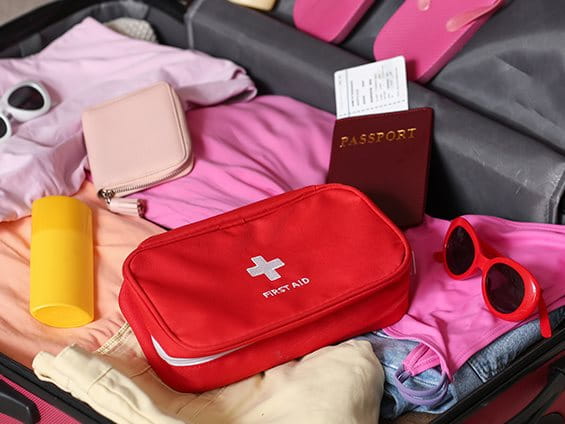
Travel First Aid Kit
- Compact adhesive bandages
- Antiseptic wipes
- Calamine lotion for bites
- Cotton swabs and gloves
- Pain relief medication
Sport & Outdoor First Aid Kit
- Extra tough plasters
- Conforming bandages
- Bandages for sprains
- Cooling spray or cold pack
- Antiseptic spray
- Emergency kit items like gloves and tape
How to Maintain Your First Aid Kit
Maintaining your first aid kit is essential for security, effectiveness, and hygiene. Check your supplies at least every six months to ensure nothing is missing or expired. Store your kit in a cool, dry place away from heat and moisture, which is especially important in the Australian climate, where high temperatures and humidity may damage packaging and reduce product quality. Replace any expired or used items promptly so your kit remains reliable.
Where to Store Your First Aid Kit
To ensure immediate access during situations requiring basic first aid, we recommend storing your kits in highly visible, temperature-stable locations.
- Home: Central, dry, and child-safe location.
- Workplace: Clearly marked and unobstructed area.
- Travel: Accessible spot within primary luggage.
- Car: Glove compartment or secure trunk space.
- Camping: Waterproof container in a central zone.
First Aid Tips & Safety Advice
Use your first aid kit only for minor injuries such as small cuts, scrapes, or sprains; seek professional medical help immediately for severe bleeding, deep wounds, suspected fractures, or any condition beyond basic care.
- Cuts & Grazes: Clean thoroughly; stop bleeding; protect with a sterile bandage.
- Burns: Cool under running water; avoid ice; cover with non-stick dressing.
- Sprains & Strains: Apply the RICE method: Rest, Ice, Compression, and Elevation.
- When to Seek Medical Help: Persistent pain; signs of infection; suspected fractures or heavy bleeding.
When to Seek Medical Help
Seek professional care if you experience severe pain, heavy bleeding, breathing difficulties, suspected fractures, or if symptoms worsen despite first aid. Your kit is for minor injuries and temporary relief only. You should never delay expert treatment for serious or escalating conditions
When to Seek Medical Help
-
What should be in a basic first aid kit?
A basic kit includes adhesive bandages, sterile gauze, antiseptic wipes, medical tape, disposable gloves, scissors, tweezers, thermometer, and pain relief items for minor injuries and emergencies. -
How often should I restock my first aid kit?
Check and restock your kit every six months, replacing expired or used items to ensure to ensure your kit remains reliable and ready to use. Regular maintenance keeps your kit ready for emergencies anytime. -
What items are essential for travel?
Travel kits should include compact adhesive bandages, antiseptic wipes, pain relief tablets, gloves, tweezers, and calamine lotion for bites, ensuring quick care for minor injuries while away from home. -
Do workplaces need different items?
Workplace kits may require extra supplies like larger dressings, elastic bandages, scissors, tweezers, and a first aid manual to meet safety expectations and handle a wider range of injuries. -
Do first aid supplies expire?
Yes, first aid supplies expire. Plasters, creams, and medications lose effectiveness over time. Regularly check expiry dates and replace items promptly to maintain hygiene and reliability in emergencies.