FAQ
1. Why do we get blisters?
Pressure and friction are usually the cause of blisters. Blisters will appear in areas where the skin is exposed to these over a long period of time, for example during sports or when wearing a new pair of tight shoes. This causes the upper layer of the skin (the epidermis) to move back and forth over the underlying layer. A space then forms between both skin layers, which becomes filled with fluid – and a blister is formed.
2. What’s the best way to treat a blister?
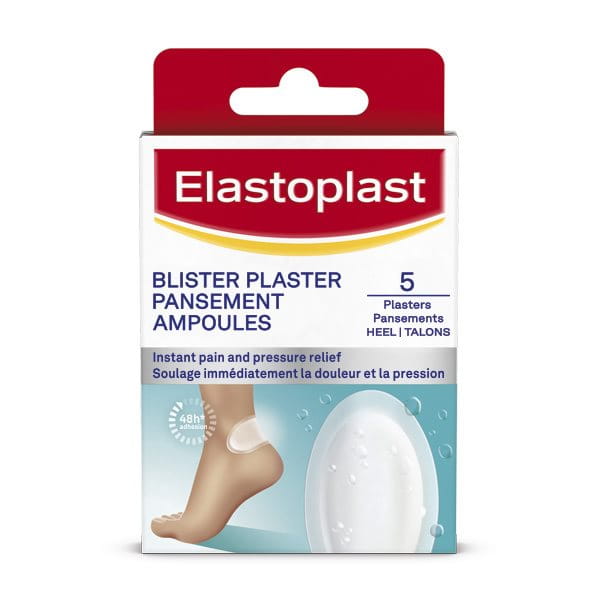
If the blister has already formed, protect it from further pressure and contamination with a blister plaster. Elastoplast Blister Plasters work so well because they contain the Hydrocolloid Technology to absorb the blister fluid and create an optimal moist wound healing environment. This allows the wound to heal faster and restore quickly. At the same time, the blister plaster seals and protects the area against dirt and bacteria. The Elastoplast Blister Plaster works to stop further pressure and relieves pressure and pain immediately, so you’ll feel better right away.
3. Do I need to pop the blister? What should I do if it popped accidentally?
Ideally a blister should not be ruptured. This is because the blister exists to protect the skin underneath from additional infection. If a blister is already open, the remaining skin layer should not be removed. Either way, it’s important to protect the wound from external influences and contamination. So, carefully clean and dry the affected area before applying anything to it. If the blister is already deroofed we recommend additional disinfection.
Elastoplast Blister Plaster relieves pain from pressure and friction immediately and creates an optimal moist wound healing environment that allows the wound to heal faster. During the healing process, the blister is sealed and protected from dirt and bacteria.
Elastoplast Blister Plaster relieves pain from pressure and friction immediately and creates an optimal moist wound healing environment that allows the wound to heal faster. During the healing process, the blister is sealed and protected from dirt and bacteria.
4. Can I use a healing cream underneath the Elastoplast Blister Plaster?
No, we don’t recommend it. Applying any ointment, cream or other product under the blister plaster could reduce its effectiveness and adhesive power.
5. How often do I need to change the blister plaster?
Elastoplast Blister Plaster with its Hydrocolloid Technology creates an optimal moist wound healing environment that allows the wound to heal faster. So that the healing process is not disturbed, and as long as no signs of infection occur the plaster should be left in place for several days. It should only be changed when it peels off by itself.


